The Best Tour of the Golden Triangle with Varanasi

- 11 Days


Day 1: Arrive at Delhi.        Overnight – The Oberoi Gurgaon


Most flights arrive either in the evening or at night, and we recommend that our guests consider arriving a day earlier as this allows you to recuperate from jetlag and serves as insurance against international flight delays and cancellations. An additional night’s hotel stay can be added at the time of reservation.
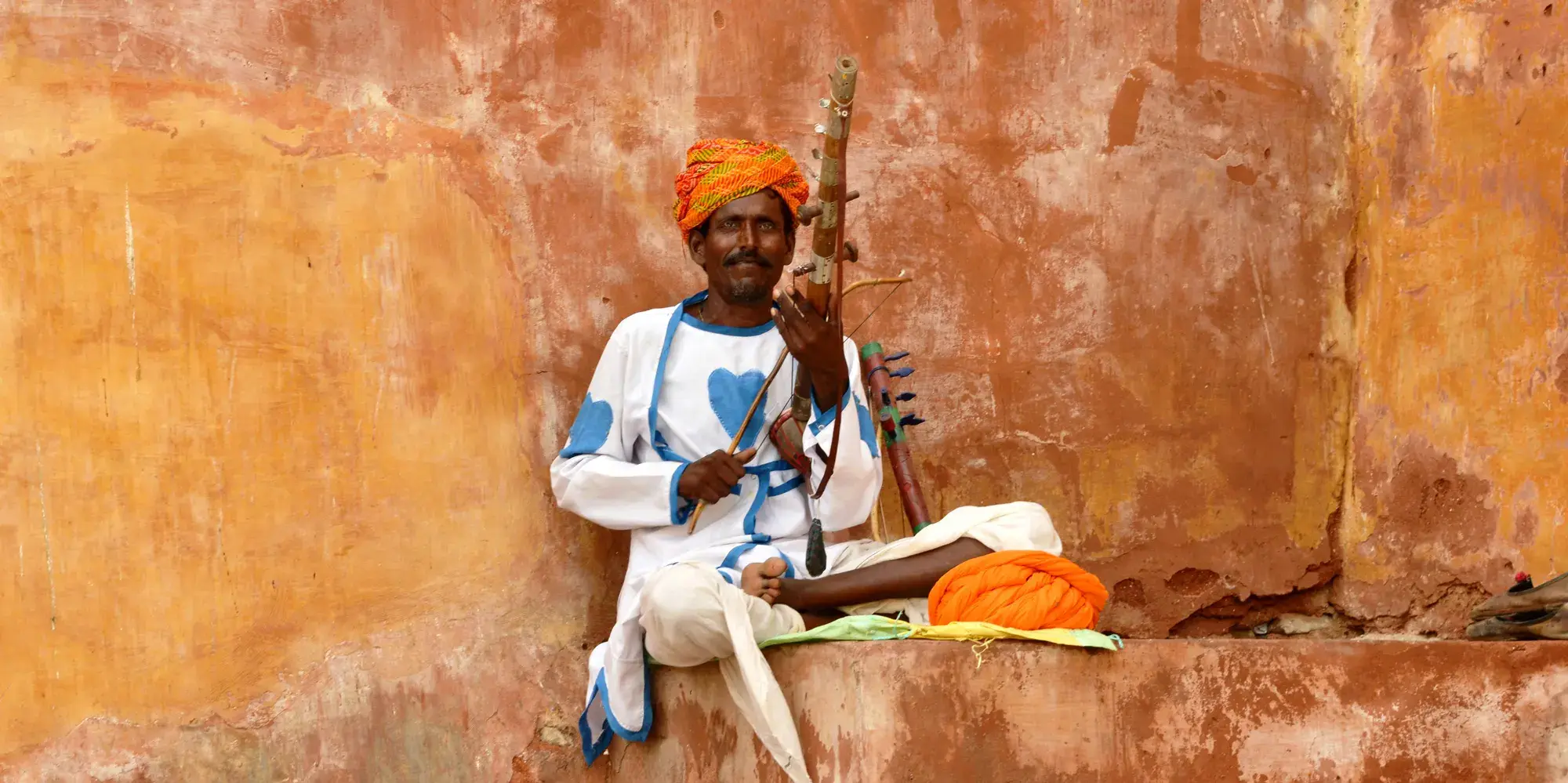
Street Musician at Jaipur

Welcome to India, home to incredible historical monuments, a plethora of natural wonders, and the world’s most colorful culture.

You are greeted as you exit the terminal by an Easy Tours Travel Facilitator or your Accompanying India Connoisseur Guide and ushered to a chauffeur driven vehicle. You are now driven to your gorgeous luxury hotel and assisted with your check-in if it is 3 pm or later. The next day’s plans are briefly discussed and you are at leisure until we pick you up in the mid-morning of the next day.
(Overnight – The Oberoi Gurgaon)

Day 2: Delhi - Varanasi. (Breakfast and Lunch)        Overnight – Taj Nadesar Palace


You are assisted with your check-out from your hotel in the mid-morning and driven to the airport after the rush hour and you are assisted with boarding your early afternoon flight to Varanasi on India’s best full-service airline - decent food is served during this flight and you will have a pretty late lunch upon arrival at your Varanasi hotel.

Upon landing you will be driven to your exquisite Palace Hotel. This is the only true luxury lodging in Varanasi and calling the small Nadesar Palace ‘boutique’ is a vast understatement. Built by the East India Company in the 18th century, it was taken over by the local Royal Family in the late 19th Century and served as a guest house for British and other Royalty during their visits to India. It is the centerpiece of a very large campus of gardens and organic farmland, and, time permitting, you can reserve an exploration on the Royal Family’s horse drawn carriage.

India’s holiest city is said to be the oldest continuously inhabited city on our planet with a history that dates back five millennia. The truly ancient part of the city, Kashi, is what this applies to. Among many other things, Hindu’s believe that being cremated here can free their soul from the cycle of death and rebirth. We will not try to go into details about this amazing destination, you will be introduced to some of this destination’s highlights. Benares is also home to some of our planet’s best handloomed silk and well-off Indians visit this destination just to purchase silk garments for special occasions such as weddings and other life events.
(Overnight – Taj Nadesar Palace)

Day 3: Varanasi. (Breakfast and Lunch)        Overnight – Taj Nadesar Palace


Two of the highlights of your time in Varanasi are the sunset and sunrise cruises on the Ganga. After a pre-dawn hot beverage and cookies, join your India Connoisseur Guide for a visit to the Ghats. It is a surreal experience to arrive at the Ghats just before dawn and witness the eons old scene - the most devout Hindu’s are waiting at the holiest Ghats to greet the rising sun as they immerse themselves in the Ganga, while others on the wide riverbank steps meditate and practice yoga. 
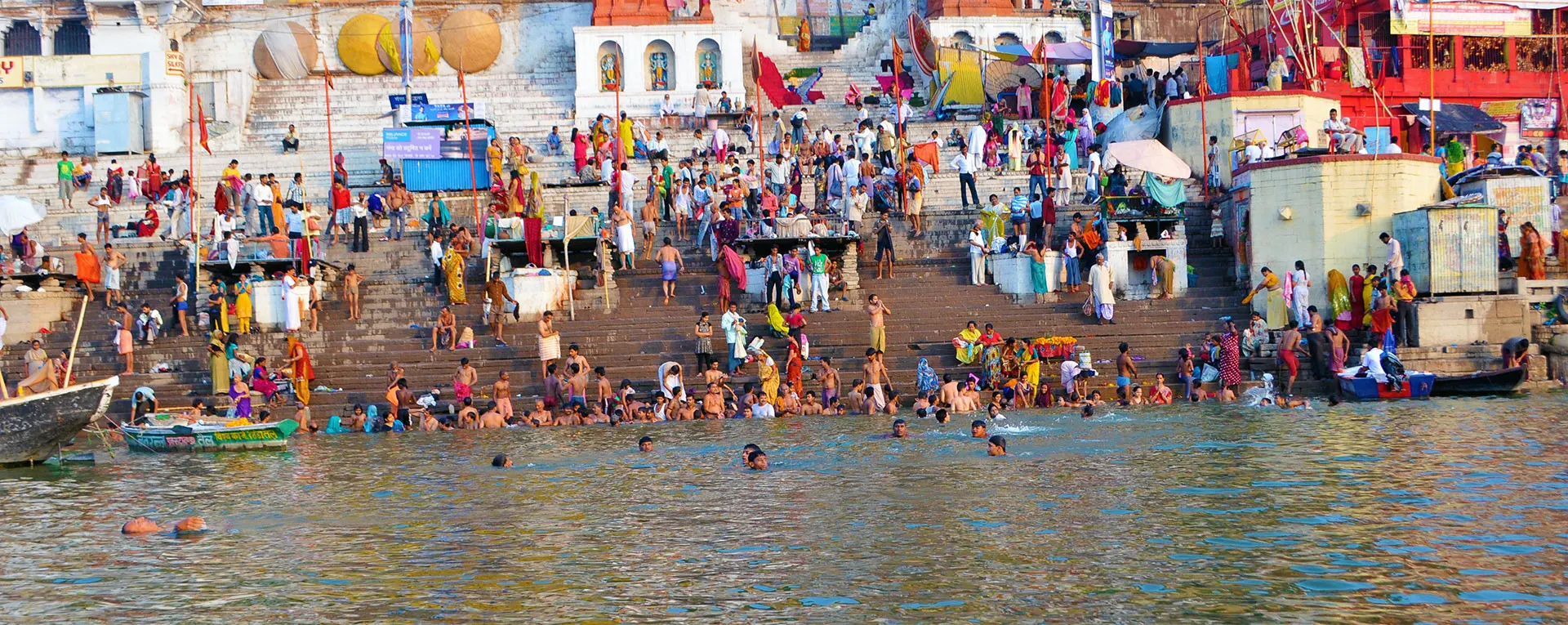
Sunrise Dip on a Festival Morning

Sunrise Dip on a Festival Morning

Your boat offers an excellent view of all the activity on the Ghats - women immersing themselves into the Ganga discreetly while still wearing their sarees and ascetics waist deep in the water offering prayers as they pour holy water over themselves.

During your boat ride you will experience a private live performance of the wonderful sounds of traditional Benares Gharana, an ancient form of music incorporating the tabla and the sitar. The ambiance created by your surroundings and the traditional Benares music has to be experienced to be believed.

Return to your palace to have breakfast, and then you are at leisure until noon, when you will enjoy lunch at the highly rated Chowk Restaurant at the Taj Ganges Hotel next door.

After lunch you are driven to a spot near the Holy River from where you will be escorted through a crowded bazaar catering to visiting pilgrims. Arrive at the ghats and commence a walk on the banks of the Ganga. This is a great opportunity to experience some of Hinduisms ancient and iconic rituals. Various rituals will be taking place on the Ghats. Such ceremonies include, but are not limited to, rituals where devout Hindu’s are getting their heads shaved in respect to a recently diseased parent, newly married couples are praying with a priest for blessings, while nearby another Brahmin priest orchestrates the naming ceremony of a newborn.

Your walk will end with you being assisted in boarding your boat for a cruise along the river to view its evening activities as you cruise and observe all the rituals and prayers, including the main cremation Ghat where the deceased are burned on wooden pyres in what is considered the holiest site for their earthly remains to depart from this world so that their souls can achieve salvation.

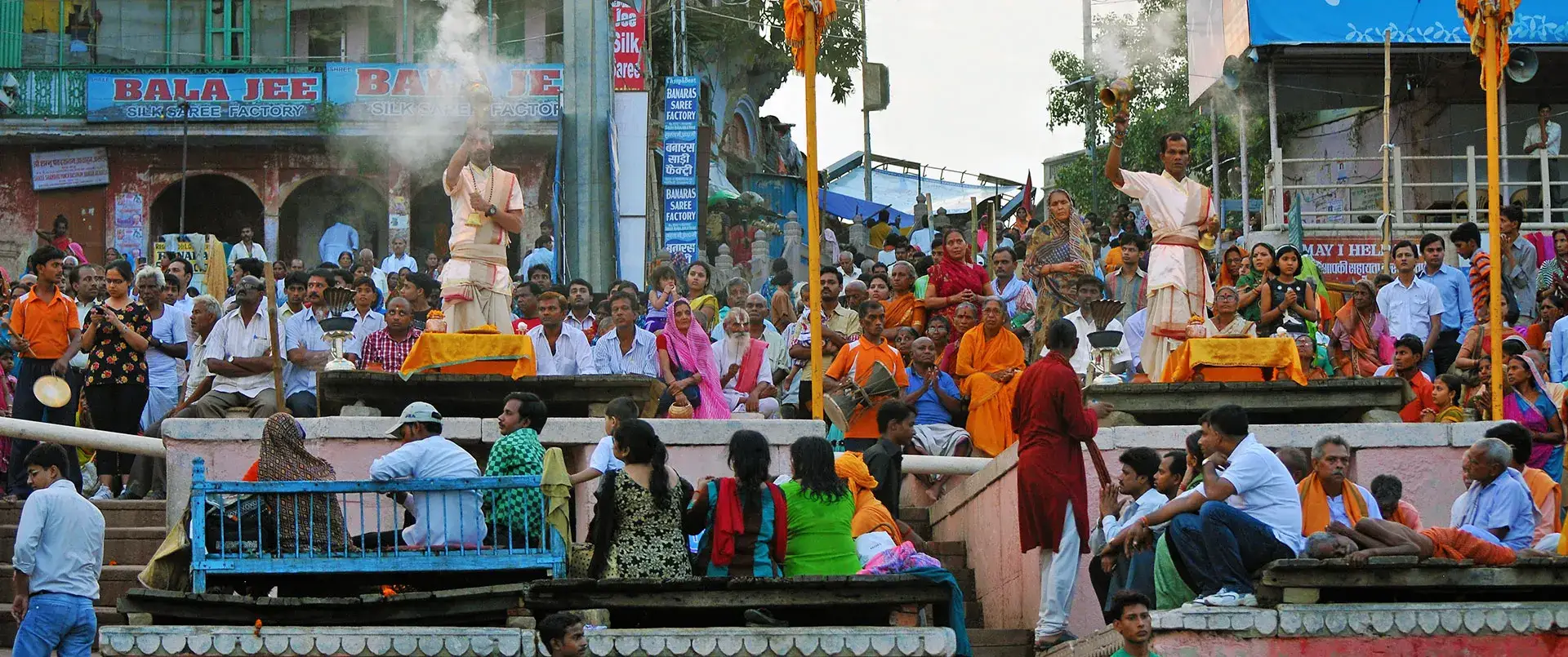
Priest Performing Sunset Aarti, Dashashwamedh Ghat

Priests Performing Sunset Aarti, Dashashwamedh Ghat

As the sun starts setting our boat excursion pauses for a close-up view of the iconic Ganga Aarti ceremony on the now crowded Dashashwamedh Ghat, the holiest place on the river.

The Ghats on the holy river’s banks stretch for a few miles and are always full of activity, but the middle of the whole expanse is where the holiest Ghats are located and where the main evening ceremony takes place. You can float your own lamps from your boat while you watch the ancient prayer and oil lamp ceremony at sunset. Your boat enables you to enjoy a great view of the ceremony and hundreds of lamps as they float down the holy river. After this you are assisted with your disembarkation at an outer bank of the river.
(Overnight – Taj Nadesar Palace)

Day 4: Varanasi - Delhi. (Breakfast and Lunch)        Overnight – Overnight – The Oberoi New Delhi


This morning you are at leisure to enjoy the facilities and ambiance until you are assisted with your checkout. In the mid-morning you will head to nearby Sarnath, a major Buddhism pilgrimage site – stopping on the way for lunch at one of the city restaurants. Attractions in this holy rural area include the massive 2300-year-old Dhamekha Stupa located near where the Buddha preached his first sermons. This Stupa was constructed by Emperor Ashoka, who is credited with the spread of Buddhism in the world. Sarnath was also where the first Buddhist Sangha was formed and the area is home to a number of other ancient Buddhist monuments that you will drive by. A highlight of the visit to Sarnath is a brief stop at the very small Archaeological Museum with its impressive collection of artifacts, which include the spectacular 4 headed lion that is India’s national emblem.

After your exploration you will be driven to the airport and assisted in boarding your mid-afternoon flight back to Delhi, which is again on India’s best full-service airline.

Day 5: Delhi. (Breakfast and Lunch)        Overnight – Overnight – The Oberoi New Delhi


Start your exploration of India with a drive to historic Old Delhi. While exploring North India, you will repeatedly experience awe as you experience some of the achievements of one of our planet’s greatest ruling dynasties ever - the Mughal Empire. You will visit three of their most famous attractions, the UNESCO Forted Cities at Delhi and Agra, and the Taj Mahal. But a lot more of what you will experience at Delhi and Agra, as well in Rajasthan, will have originated under the kingdom’s influence. The Mughal’s also left behind unique cuisine, uncountable other monuments, bazaars, and a lot more, many of which you will experience during your exploration.

One of your most enduring memories of India will be your next experience as you walk through the ancient (from the time of the Mughals) Chandni Chowk Bazaar, home to the world’s largest spice market. The cacophony of sounds which have echoed through the centuries, the cries of hawkers and the animated bargaining, along with the incredible colors and the diverse smells emanating from the street food stalls and spice markets combine to make for an experience that is unique to this ancient bazaar.

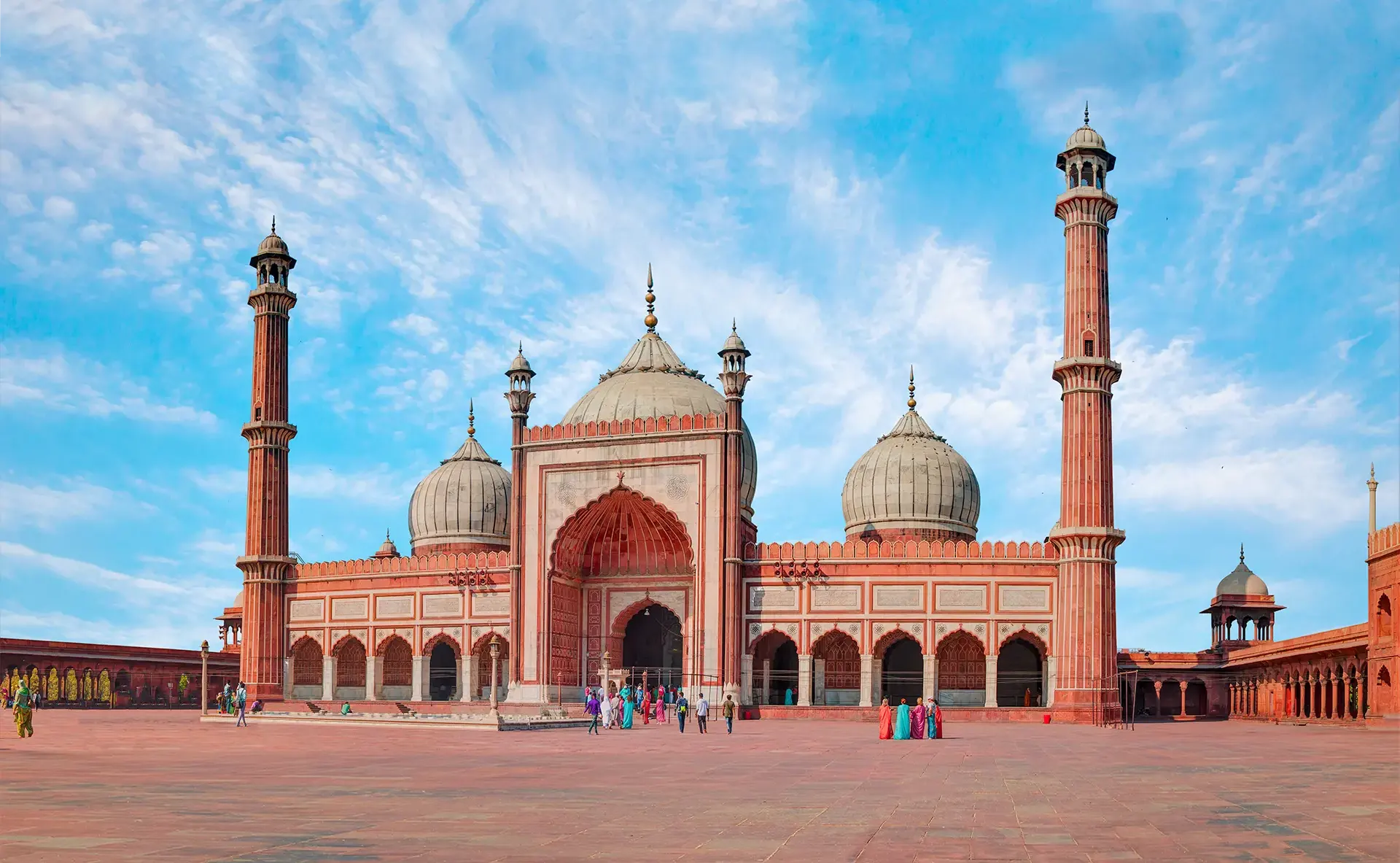
Jama Masjid

Jama Masjid

This will be followed by an e-rickshaw ride which ends at the Jama Masjid (1650 A.D.), the largest mosque in India.

The Masjid is a magnificent example of Mughal architecture and is constructed of red sandstone and white marble. It is an active place of worship and its courtyard can hold 25,000 worshippers. Bare legs and shoulders are not permitted inside the mosque and we include rented sarongs and scarves. After this you will drive close by for lunch at the historic Curzon Room in the century old Maidens Hotel.

Start your afternoon with a fairly short drive to Raj Ghat, driving between the massive back walls of the Red Fort and the Yamuna River. You will experience a brief stop at the memorial to the Father of the Nation, Mahatma Gandhi. The centerpiece of this peaceful and serene campus are an unadorned black marble structure and an eternal flame that evoke his simplicity, humanity, and spirituality.

You will be driven next door to the awe-inspiring Red Fort. The great city inside the massive sandstone walls of the Red Fort offers visitors a large number of architectural and historical attractions. The Red Fort was the seat of the Mughal Empire for more than two hundred and fifty years and is obviously a UNESCO World Heritage Site. It is an amazing example of a blend of Persian, Indian and European architecture. Both this fortified city and the Jama Masjid you visited earlier today were built by Shah Jahan, the Mughal Emperor who created the Taj Mahal. After exploring the Fort, you are driven back to your hotel so that you can arrive before Delhi’s rush hour.
(Overnight – The Oberoi New Delhi)

Day 6: Delhi. (Breakfast and Lunch)        Overnight – The Oberoi New Delhi


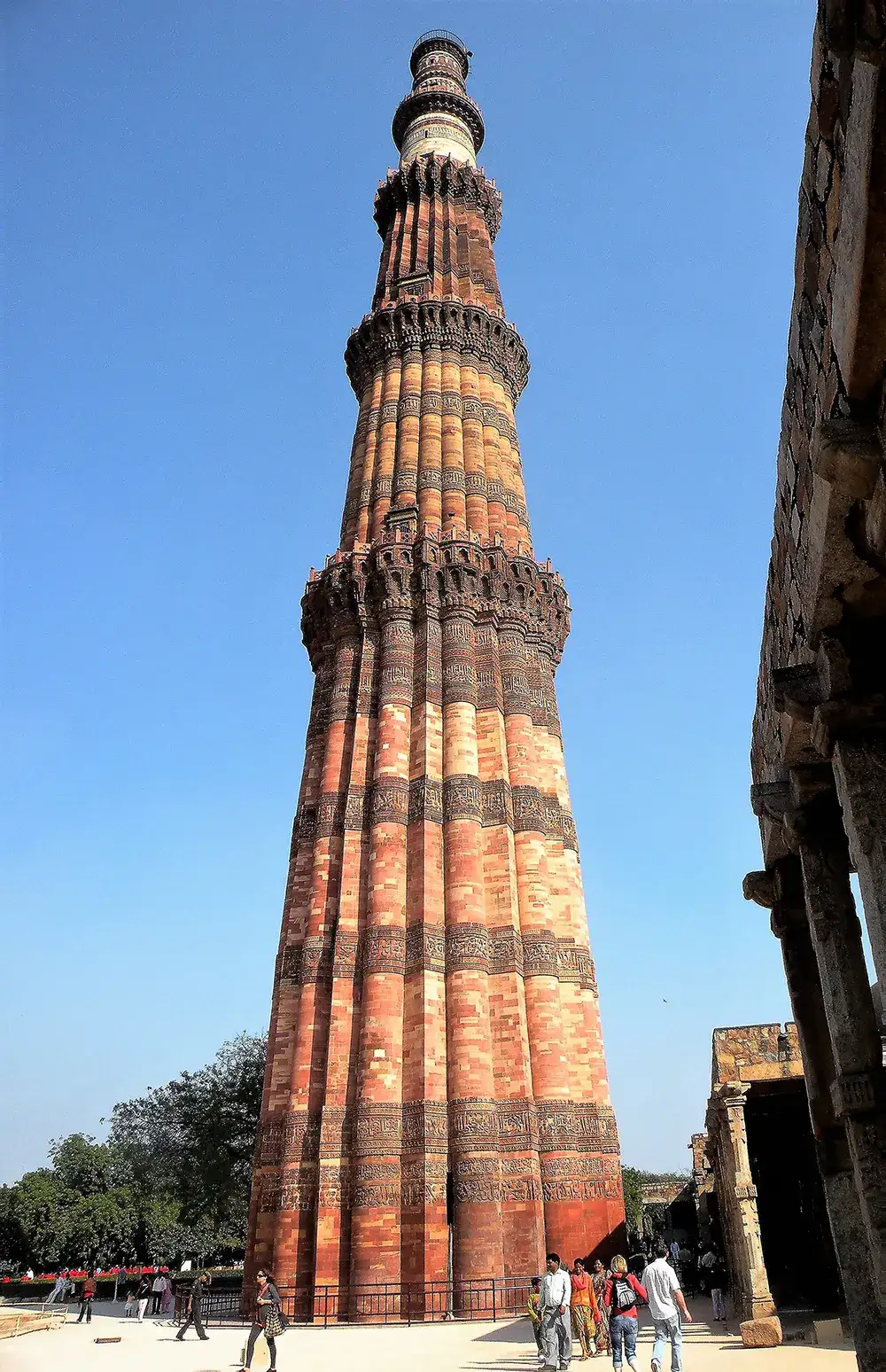
Continue your exploration of New Delhi with a drive to the awe-inspiring 12th century Qutab Minar, a UNESCO World Heritage Site. Delhi has over 500 ancient structures strewn over its vast expanse, with many of them in various states of disrepair. For mankind’s achievements from about a millennium ago, the Qutab Minar is unmatched in its architectural brilliance and longevity.

Qutab Minar

Qutab Minar

This 240 ft tall medieval tower is a symbol of victory and a spectacular example of Persian architecture, with intricate carvings and gorgeous inlaid calligraphy.

Within the Qutab complex, amidst the ruins of the Quwat-ul-Islam Mosque, stands the legendary 2500-year-old Iron Pillar. The pillar stands 23 feet and 8 inches tall, weighs about 7000 pounds, and has inscriptions that are still legible to a great extent. This massive cast iron structure is said to have been moved from its distant cave shelter to Delhi around the 12th century.

From here you will proceed for a drive through some of Lutyens’ historic New Delhi. Your drive will take you through Delhi’s Diplomatic Enclave on tree lined avenues surrounded by embassies of the world’s major nations.

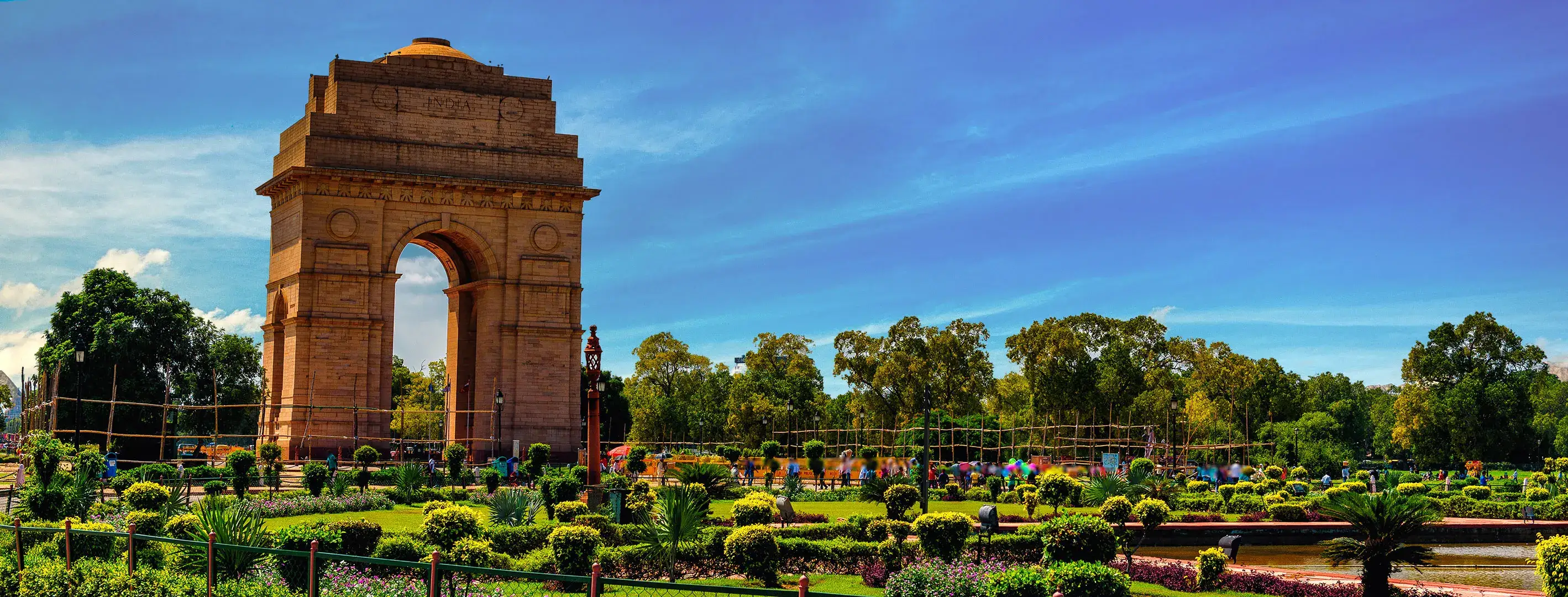
India Gate

India Gate

You will stop for a view of the exterior of the massive and awe-inspiring Rashtrapati Bhawan, which was known as the Viceroy’s House during the British era.

From here you can also enjoy a striking view of the India Gate at the other end of majestic and historic Rajpath, the former Kingsway.

After a very short drive on Rajpath you will arrive at the India Gate, a War Memorial to the 84,000 British Indian Army soldiers who lost their lives in the First World War, and Indian casualties in other wars. You will learn a little about the magnificent structure, which is often compared to the Arc de Triomphe in Paris. Explore the gardens and monuments around the area. From here you will be driven through a section of Connaught Place, which is New Delhi’s downtown and still retains its colonial architecture and design. Lunch will be at a fine-dining restaurant in Connaught Place, with options between multiple cuisines.

Next comes the nearby Bangla Sahib Gurudwara, which is a large gold domed Sikh House of Worship and is the most prominent Gurudwara in Delhi. It was first built as a small structure in 1783 and then expanded over the next few decades. The campus includes the temple, a kitchen, a school, an art gallery, and the Sarovar (Holy Tank) whose water is called Amrit (Holy Nectar). As with all Sikh Gurudwaras, volunteers, including children and the elderly, the extremely wealthy and not so well-off perform almost all the chores required to keep the Gurudwara functioning. A fascinating part of this is the daily langar (community meal), and you will witness as thousands of meals are served to all visitors who want one, regardless of race, religion, gender or belief. Only vegetarian food is served, so that no religions dietary restrictions are violated.

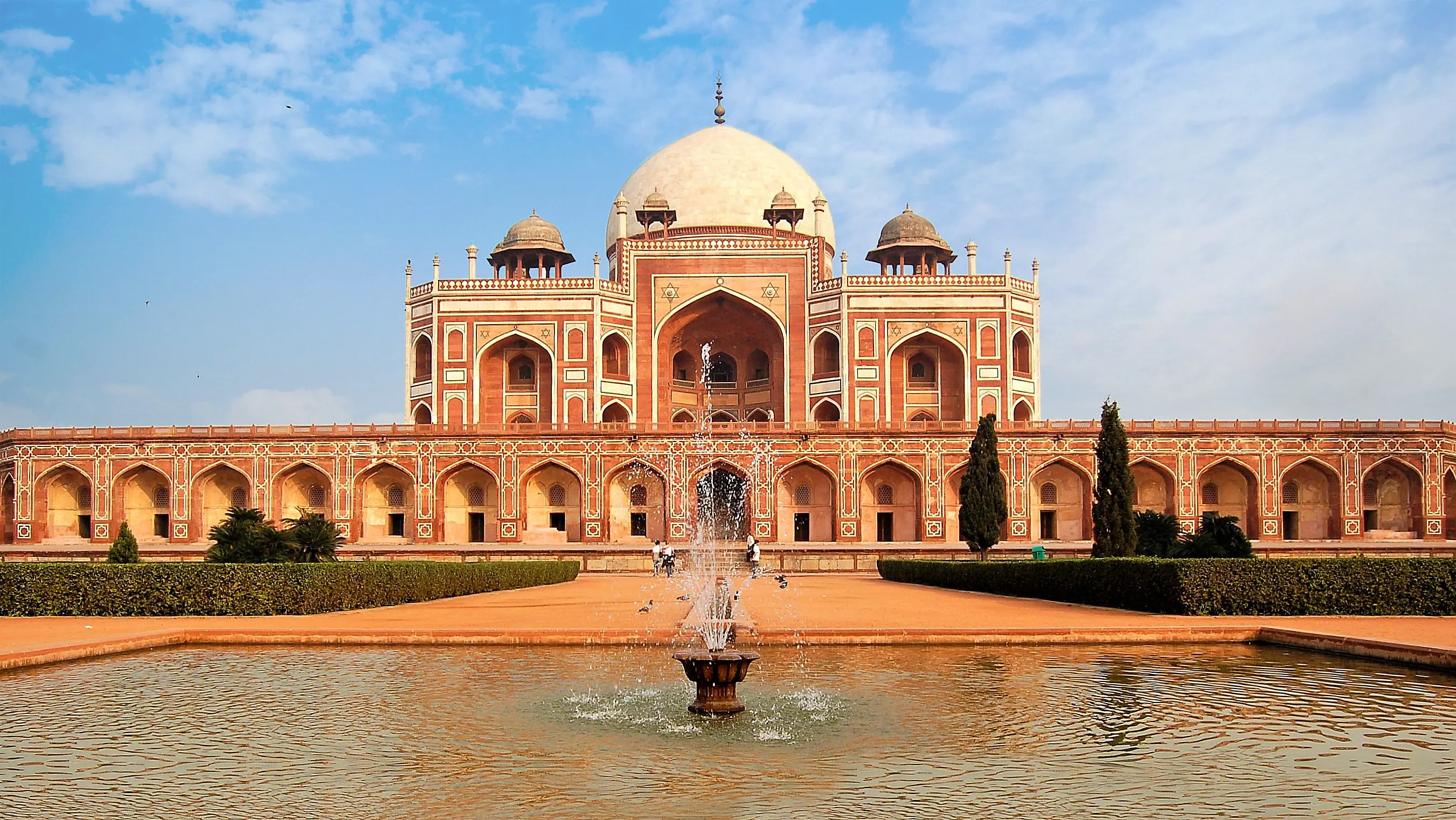
Continue your exploration of Delhi with a visit to the magnificent tomb of the Mughal Emperor Humayun. Delhi has such an abundance of amazing monuments that this Tomb Complex (1562 A.D.) does not quite get the acclaim that it deserves.

Humayun's Tomb Front

Front View of Humayun's Tomb

It is one of Delhi’s three UNESCO World Heritage Sites and its striking beauty and flawless proportions will captivate you.

A five-minute drive from here will take you to the beautiful Lodi Gardens. This massive garden complex is spread over 90 acres of priceless real estate in the heart of Delhi, and contains the tombs of various rulers of the Pashtun Dynasty that ruled much of Northern India during the 16th century. There are lush lawns and a plethora of flowers and plants mixed in with all the monuments.

Very near the gardens is the Lodi Art District, your last destination before returning to your hotel. Delhi isn’t famous for its street art and murals, and the large amount of street art found all over this upscale part of the city will both surprise and delight you. The subject matter ranges from quirky to distinctly ethnic Indian and there will be surprises around every corner. A google presentation on the Lodi Art District - https://artsandculture.google.com/exhibit/lodhi-art-district-st-art-india/NQKi787tb1GHJA?hl=en.
(Overnight – The Oberoi New Delhi)

Day 7: Delhi – Agra. (Breakfast and Lunch)        Overnight – IHCL Tajview Hotel by Taj Hotels


You are assisted with your check-out from your hotel after an early breakfast and you will be driven to the neighboring Nizamuddin Railway Station. An Indian railway station is an experience an itself, always abuzz with activity as India’s vast masses travel on the world’s largest rail network. Although the stations premises are not particularly sanitary, your train and your compartment are very clean and the best that India has to offer on its passenger trains, with comfortable and wide reclining seats and a clean and pleasant environment.

You will be on India’s fastest train, the Gattiman Express (8:10am – 9:50am), which reaches speeds just under 100 miles an hour on parts of this journey. You will be assisted in boarding your compartment, the best available on the train, and your baggage will be ported to the racks above your seats. Your India Connoisseur Guide assists you in getting seated in your assigned seats and gets your luggage ported to the appropriate location above your seats. Refreshments are served by Indian Railways during this journey - we recommend that you refrain from consuming these (except for the bottled water).

You are greeted on arrival at Agra station and you will now proceed to the first red sandstone fort of North India, the Agra Fort, another UNESCO World Heritage Site. This Forted City was built in 1565 by India’s greatest Mughal ruler, Emperor Akbar, and almost everything here was copied in Delhi’s larger Red Fort. Its royal audience halls, immense stone courtyards, marble mosque and the private royal chambers give us a glimpse of the grandeur of the Mughal Empire. There are unique views of the Taj Mahal from a section of the fort, including the room where the Taj Mahal’s creator, Emperor Shah Jahan, was imprisoned during the later years of his life by his infamous son and successor, Aurangzeb.

After exploring the fort you are driven to your hotel where you will enjoy lunch at the main restaurant before being assisted with your check-in. This moderately upscale hotel has a few newly renovated upgraded rooms on its higher floors that offer the second-best views of the Taj Mahal among all Agra hotels, and these are the rooms we use for your stay.

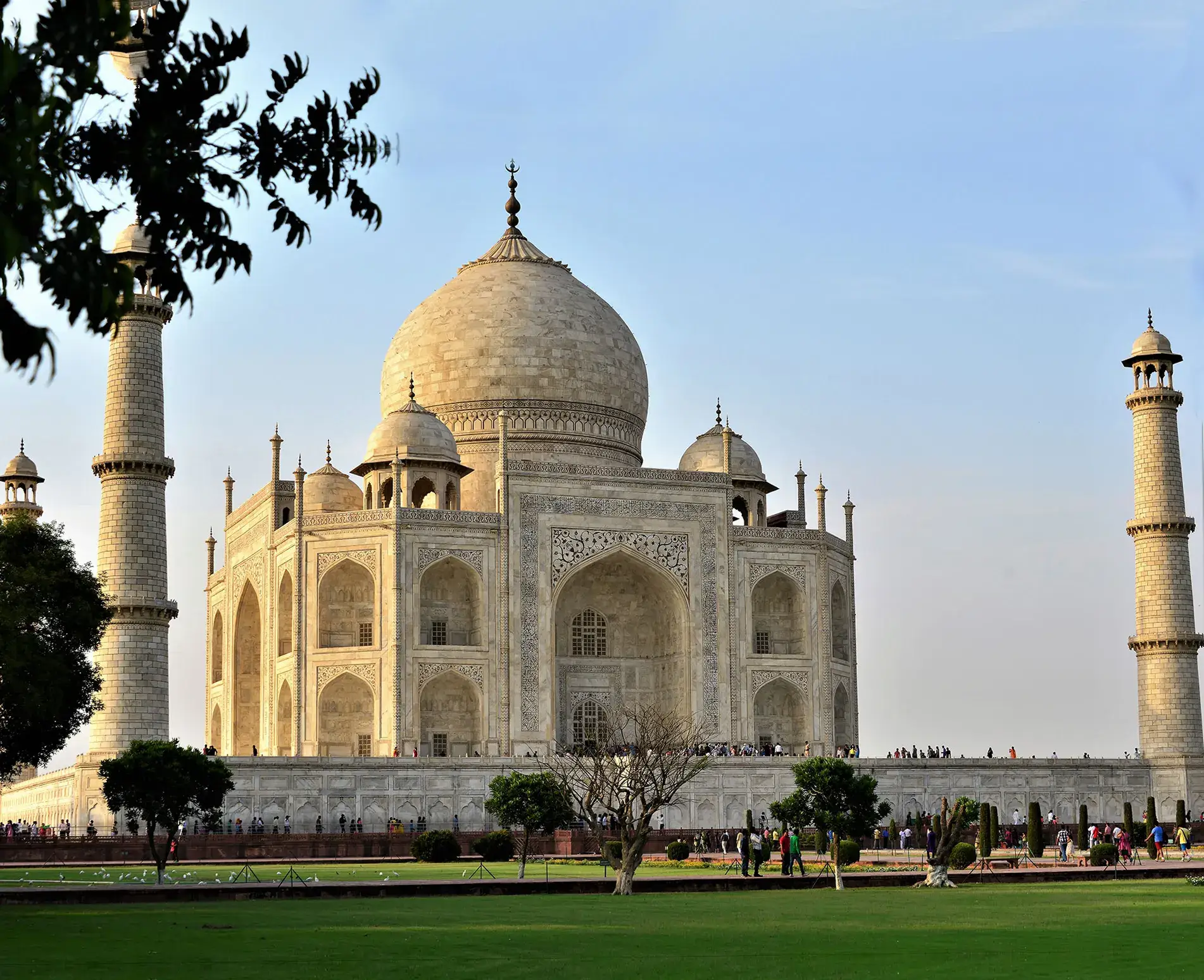
Taj Mahal - Late Afternoon

Taj Mahal - Late Afternoon

After lunch you will proceed for a late afternoon visit to one of the Seven Wonders of the World, the incomparable Taj Mahal.

Experience the amazing Taj and its surroundings in bright sunlight, culminating with an opportunity to admire the sun’s rays setting on the façade of the world’s finest monument. The Taj Mahal was completed by Emperor Shah Jahan in 1653 A.D. as a memorial to his beloved queen Mumtaz Mahal. This spectacular white marble mausoleum was created by about 22,000 skilled craftsmen, many of whom were brought here from far away nations, and it took twenty two years to complete. The world’s greatest monument dedicated to love is obviously a UNESCO World Heritage Site. When you experience the Taj Mahal with an Easy Tours’ India Connoisseur Guide who shares unique insights into its innumerable facets, some of their passion for this masterpiece may rub off on you.
(Overnight – IHCL Tajview Hotel by Taj Hotels)

Day 8: Agra - Jaipur. (Breakfast and Lunch)        Overnight – Jai Mahal Palace


Enjoy a sunrise visit to the Taj Mahal. Morning is the best time to experience it in terms of crowds - it is more expensive for Indian tourists to enter at this early hour and so the massive monument and its surrounding Mughal gardens have a lot fewer visitors than the rest of the day. As the rising sun’s rays illuminate the precious stones inlaid in the marble they will gleam momentarily and change colors.

Return to your hotel in time for breakfast and to prepare for the day’s journey and then you will be assisted with your checkout in the mid-morning. You are driven to the Chand Baori stepwell at Abhaneri, located just off the highway before you turn into the countryside. The massive 10th century Chand Baori Stepwell is one of the most impressive in all of India and is located next to a charming Rajasthani village. The depth of the stepwell is that of a modern 7 story building, and there are stairs (no longer accessible to visitors) leading down to the bottom from three of the 100 foot plus wide (35 meters) sides, creating symmetry and beauty to the ancient structure.

You will proceed nearby to a rural resort which serves farm fresh organic and all-natural produce, as well as pasture raised chicken and lamb in its restaurant. After lunch you will continue on with your journey to the UNESCO World Heritage City of Jaipur.

Upon your arrival at Jaipur, a tailor will take measurements for your traditional Indian apparel which will be expertly tailored to your measurements. You will be shown options for colors and other customizable elements that you can select based on your preferences. These garments will be made of superior materials and we recommend donning them for dinner at your hotels and on other occasions when you feel like it.

You are assisted with your check-in to your beautiful 17th century palace hotel upon arrival in Jaipur. Your lodging offers a vast expanse of beautiful tiered gardens, nightly regional cultural performances, wonderful cuisine, and many reminders of the royals who once occupied its original suites, such as the almost life-size chess set in its gardens. You are in the center of historic Jaipur, and most of your sightseeing is fairly easy to reach despite this city’s bustling traffic.
(Overnight – Jai Mahal Palace)

Day 9: Jaipur. (Breakfast and Lunch)        Overnight – Jai Mahal Palace


Begin your exploration of the walled pink city of Jaipur. You will start with a stroll through the fascinating main bazaar in the heart of the pink city and watch the locals as they shop for pretty much everything a consumer can possibly want. This atmospheric and crowded bazaar has street sellers of vegetables, fruit and other goods occupying the curbs with their displays. There are stores selling spices, nuts, flowers, toys, footwear, hardware, and a lot more, mixed in with street food vendors and brick and mortar eating establishments. Byzantine alleys lead into inner courtyard shops.

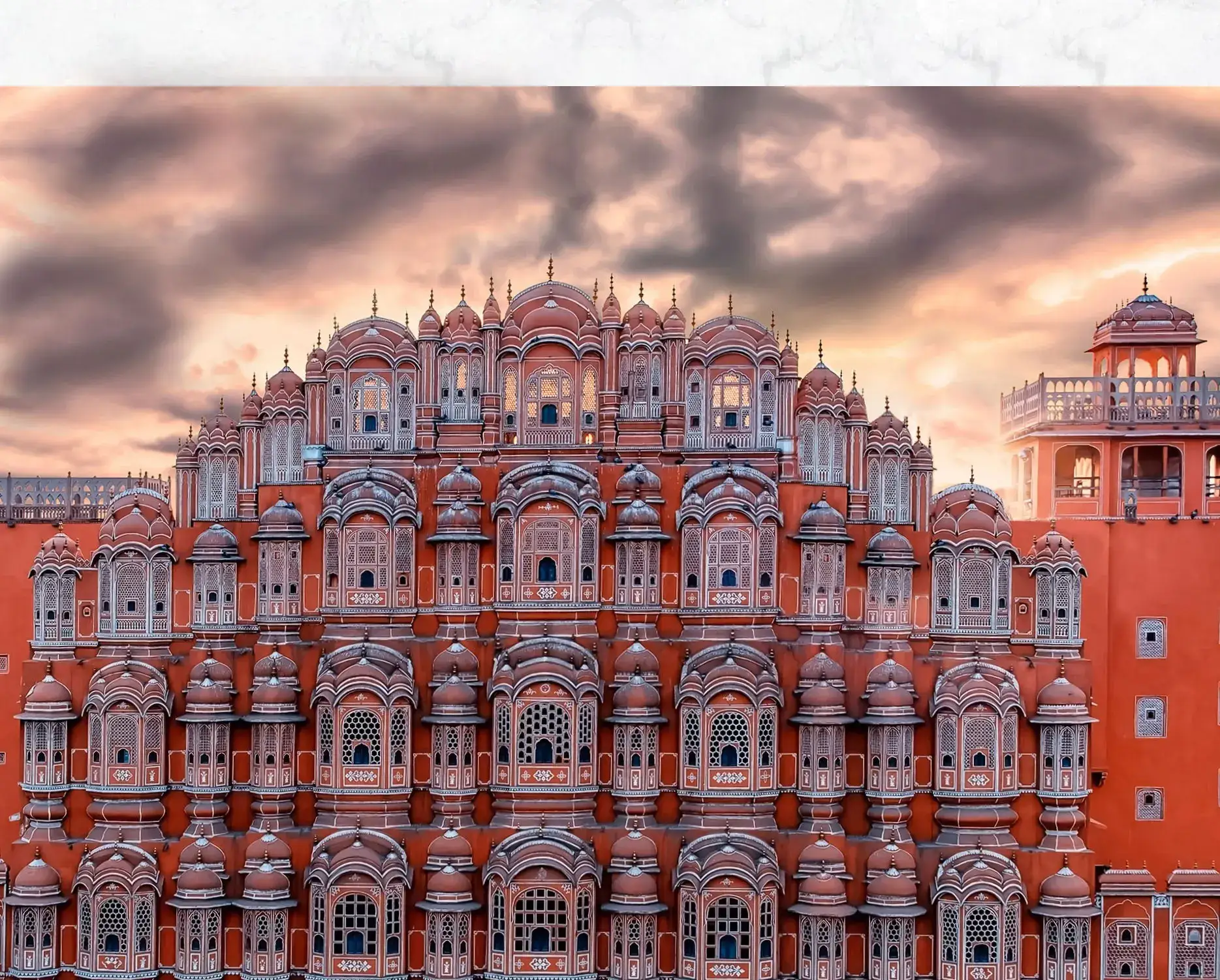
After a few minutes of walking, you will arrive at the most photographed of Jaipur’s monuments, the enchanting Hawa Mahal (Palace of the Wind).

Hawa Mahal

Hawa Mahal

This intriguing facade was built in 1799 so that the ladies of the court could use its unique windows and observe the bustling bazaar without being visible to the people on the streets.

Jaipur is India’s capital for jewelery, and the largest supplier of exquisitely crafted jewelery to much of the world, and Johri Bazaar (jewelers’ market) is a historic enclave that happens to be the center of the largest precious stone cutting area on our planet. You will experience a short walk through a section of the area (please note that all the jewelry manufacturers are located on higher floors and so you will not be seeing the jewelers at work) and soon arrive at a small boutique hotel, The Johri. This five-room inn has an excellent restaurant where you will enjoy lunch. Locally sourced fresh organic vegetarian cuisine is served here, and you will order ala carte from their menu of seasonal and regional offerings. We strongly recommend all their chaat and appetizer items, but their main entrees are not to be missed either.

After lunch you will proceed for a visit to the Jantar Mantar (a UNESCO World Heritage Site), a fascinating stone observatory built in 1728. Among other instruments, it includes a massive stone sun dial that is accurate to within 2 seconds. Located next to Jantar Mantar is the City Palace, the royal residence that was built in a delightful blend of Rajasthani and Mughal architectural styles. A part of this massive complex is still occupied by the Royal family and is not accessible to the public. Your Tour Director will regale you with stories of royalty as you admire their trappings. This immense complex also houses a number of museums that include displays of armor, miniature paintings, and a large and impressive collection of ancient royal garments and accoutrements.
(Overnight – Jai Mahal Palace)

Day 10: Jaipur. (Breakfast and Lunch)        Overnight – Jai Mahal Palace


Today will start with three of Jaipur’s off the beaten tourism track historical destinations, which also happen to be among the most wonderful opportunities for photography in India. First you are driven to a very scenic location in Jaipur adjacent to a public park, The Albert Hall Museum, which was completed in 1887 by the architect Samuel Swinton Jacob. You won’t enter the museum as this stop is solely for you to walk around and take-in the absolutely gorgeous Indo-Saracenic architecture. Rudyard Kipling (himself the son of a museum curator) on a visit was so impressed that he wrote "it is now a rebuke to all other museums in India from Calcutta downwards".

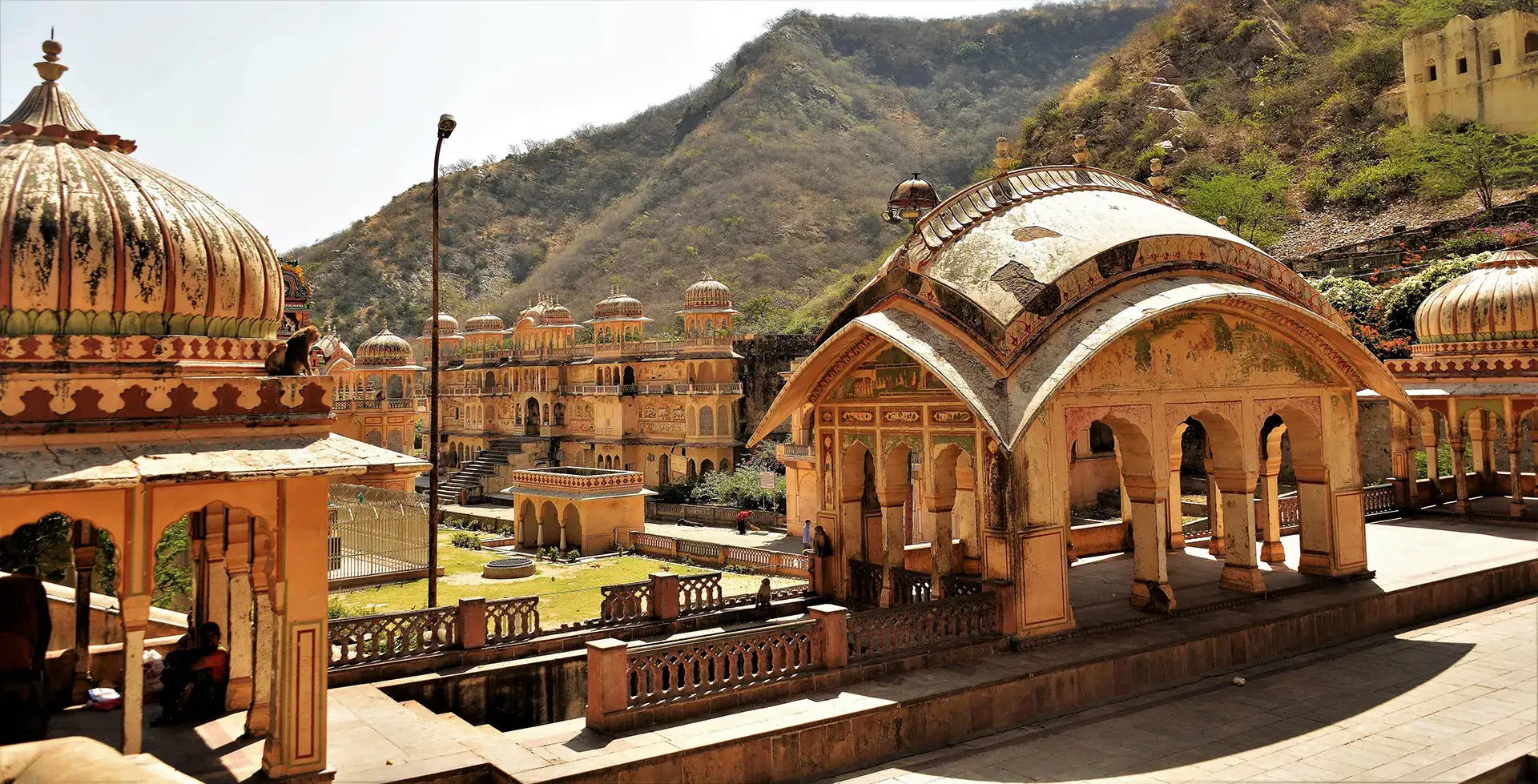
From here you are driven to the ancient Hindu pilgrimage site of Galtaji, located in a crevice in the Aravalli Hills. This 15th century complex of temples here is sometimes referred to as the Monkey Temple by tourists because a large tribe of monkeys lives here and believes they own the complex. The picturesque complex of temples has seven ponds that are fed by springs on the surrounding hilltops, and Hindu pilgrims consider taking a dip in these to be purifying. The beautiful temple complex has been a retreat for a sect of Hindu ascetics since the 16th century.

The monkeys agree and swim around the main pond with reckless abandon, and many of them can be seen diving into the tank from various vantage points.

Part of Galtaji Temple Complex

Part of Galtaji (Monkey) Temple Complex

Enjoy a guided tour of the beautiful Galtaji Temple, which is crafted in pink stone. There are other ancient temples in the complex, and you will visit a couple of them, including the Balaji Temple.

Monkeys are everywhere, and they are obviously in-charge! For someone not used to their social behavior and grooming rituals, observing them can be fascinating.

From here you will be driven to Jaipur’s best kept secret, the royal cenotaphs known as Gaitore ki Chhatriyan. By now you will have seen many examples of Chhatri’s (ornate umbrella shaped domes), but those that cover the individual tombs and structures here are a sight to behold, and an incredible Instagram opportunity. In a city full of UNESCO Sites and incredible colors, this complex is sometimes our guests’ favorite memory of Jaipur. Although you are still in today’s Jaipur, this spots serenity and scenery is a surprising break from the crowds and noise. The complex was first used in 1733 AD for a tomb that marked the cremation site for Jaipur’s Rajas. Although each of the smaller structures is worth a detailed exploration, the highlight is the large intricately carved white marble cenotaph of Jaipur’s founder, the legendary Maharaja Sawai Jai Singhji.

On the way to your next destination, you will stop for lunch at the excellent restaurant at your hotel as it lies on the way.

Amer Fort and Palace

Amer Fort and Palace

After lunch you will explore the awe-inspiring Amber Fort and Palace complex, a UNESCO World Heritage Site.

This complex was completed in 1599 AD after 25 years of construction. You will be driven to the back entrance as Easy Tours does not offer elephant-back ascents up the ramparts of the complex. The massive forted city inside the complex is one of India’s finest examples of Rajput architecture. You will explore the gorgeous chambers and hallways, which are famous for their exquisite designs and handcrafted embellishments. Your Guide will regale you with the history of the various structures as you take in the amazing workmanship of the craftsmen who created them.

This late afternoon guests will be driven back to your hotel for some relaxation. Jaipur is India’s shopping mecca for all sorts of exquisite hand-crafted items, fabrics, carpets, as well as jewelery. Guests who are interested in shopping can choose to continue on and have your India Connoisseur Guide serve as a personal shopper for a while before being driven back.

This evening you will be presented with your bespoke Indian garments and the hotel staff will be happy to assist you in the right way to don your new clothes – female colleagues at the hotel can assist lady guests with their clothing, if needed.
(Overnight – Jai Mahal Palace)

Day 11: Jaipur - Delhi – International Flight. (Breakfast)


You are assisted with your check-out in the mid-morning and you can choose to get a packed lunch from the palace, before you are driven to Delhi Airport, which is located right off the Jaipur Delhi highway just as you enter the city.

Check-in requirements for premier classes is 2 hours before the flight departure, and 3 hours for coach. If you leave Jaipur by mid-morning, barring unforeseen circumstances, you will miss heavy traffic and the drive will take five hours. We recommend leaving Jaipur at least 6 hours before your required check-in time, and we do not drive in the dark. A couple of miles before you reach the Delhi airport exit, you can get off the highway and visit the Oberoi Gurgaon’s (located right next to the highway) restaurants or bar. At the appropriate time you will be driven to the airport to board your outbound flight.

Please note that almost all international flights depart from India’s airports either very late at night or early in the morning.

Your assigned Easy Tours’ Guest Relations Manager will make further recommendations based on your international flight details, once you provide us with that information. Any additional services, such as a one-night hotel stay, will be suggested based on those details.
Our services end with your Delhi airport drop-off.


Lodging

Delhi
The Oberoi Gurgaon - Deluxe Room
Varanasi
Taj Nadesar Palace – Palace Room
Delhi
The Oberoi New Delhi – Deluxe Room
Agra
IHCL Taj View Hotel by Taj Hotels – Executive Taj View Room
Jaipur
Jai Mahal Palace – Luxury Room

Experiences & Meals

The Best Accompanying India Connoisseur Guide
Sunrise and sunset boat cruises on the holy river in Varanasi
Sunrise and Sunset visits to the Taj Mahal
Private Benares Gharana music performance during sunrise cruise in Varanasi
E-Rickshaw Ride in Old Delhi
Daily breakfast except for Arrival Day
Daily lunch except for Arrival and Departure Days
Lunches/Dinners include regular bottled water
Bottled water during your drives, sightseeing, and at your hotels
WIFI at your hotels (Some hotels in India still charge for WIFI)
Hotel check-in is at 3pm and checkout is at noon for almost all the hotels
All transfers and sightseeing by Upscale Mini Coach
Delhi - Agra Train travel by Executive Class
All currently applicable taxes.

Flights on this Journey

Sector Class Baggage Allowance
Prepaid Increases Available
Delhi - Varanasi Coach Class 44 lb.
Varanasi - Delhi Coach Class 44 lb.

Not Included

International Travel
Expenses of a personal nature like tips, laundry, telephone calls, etc.
All alcoholic and non-alcoholic premium beverages
Meals other than those specified above
Travel insurance, visa etc.
Camera and Video Camera Fees

Annual Sale. Aug 16th to Aug 30th
Save 10% On All Our Tours

Flexible Yes   No
 
Please wait while we are processing your request...